top of page
logo CasaCifali

Casa Cifali

CIR 19083097B400188. CIN IT083097B4VO4O7KZ4

The Sicilian Trails

Choose your  Rooms


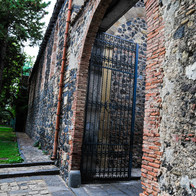
A small, friendly village just above Taormina placed on a rock. The name is inspired by the shape of the great rock on which rests, reminiscent of a "wheel.” Its history begins in the pre-Hellenic period. Because of its location, it was one of the acropolis of Taormina. Its original name was Mylai and here lived the Sicilians, as evidenced by necropolis of Cocolonazzo. Later it was conquered by Dionysus. In 367, Adromaco built his town in the Ficare project by building fortified walls and water cisterns which still exist today. Numerous dominations followed, until the arrival of the Moors. Hibraim managed to breach the fortifications of the city and destroy the citadel. The castle resisted the Moors invasion, who then headed towards Taurmenium, through the door which has since been called the "Saracens." Arab rule ended in 1078, with the rise of Roger the Norman who conquered Taormina after seven months of siege. Roger built a new town around the castle, called Mola. If you like walking, I recommend you take the steps for a shortcut that passes through the ancient settlement through the Saracen door. One of the things to see in Castelmola is what remains of the castle and its panoramic view overlooking the entire area. The town is part of the circuit of the most beautiful villages in Italy. When you arrive, stop and enjoy a glass of almond wine, perhaps accompanied by a delicious almonds cookie or Piparelli biscotti.


  • Writer: Massimo
    Massimo
  • Mar 28, 2022
  • 2 min read

The ideal way to follow this street is with a motorcycle, but if that is not possible one can experience the same great emotions in a car. Following the winding roads of Etna, just 62km from Taormina under the slopes of Etna is the town of Maniace with the famous Nelson Castle. If you have time, it is worth a visit to this beautiful valley in the center of Sicily.

The origins of this little village on the slopes of Mount Etna are very remote, even if you know little about his story. What is certain is that it is named after the Byzantine general Giorgio Maniace who in 1040 defeated Abdallah's Muslim troops in order to regain Sicily.

Throughout the Middle Ages, this street was the most important artery of penetration in the interior of the island with numerous fortifications along its entire route. It served as the passage for Pellegrini but also for kings and nobles with their armies.

Here, bloody battles took place between the Normans and the Arabs, with the famous Grand Count Ruggero.

Contessa Adelaide from Monferrato came to get married to Count Ruggero, bringing a very big colony of people from north Italy known as Lombardy, increasing the local population. With their arrival came also their culture and their language. They were employed to defend the island first under William the Norman and then under Tancredi.

Among the most important events to be noted, in 1089 Pope Urban II stopped in this remote village and for him it was a joy to find a Christian witness, perhaps the last in that pagan and Arab territory, in the beautiful picture of the still-existing Virgin, revered in that small chapel erected by the Byzantine General in perpetual memory of his victory and left to the inhabitants as the protector of those homes that would have since taken his name. He prostrated himself in front of the sacred and maternal image of the Madonna under the title of "Mother of God" and invoked her motherly help for his enterprise, in order to obtain from the conqueror the restoration of Christian life and hierarchy on the island.

For the first time, the Catholic Church of Rome granted to a sovereign ruler many administrative privileges, among which included the ability to manage bishops, the financial assets of the dioceses and the establishment of a metropolis. A singular institution that is in the hands of rebellious rulers, guided solely by their interest or by the reason of state or often by arbitration, creating so many disagreements over the centuries.

In 1172 Queen Margherita, the mother of Guglielmo II, called il Buono, founded a Benedictine abbey dedicated to Santa Maria (also called Ducea of Nelson, Nelson Castle and Ducea of Maniace). The building is located on the border between the municipalities of Bronte and Maniace, in the province of Catania. It was founded by Queen Margaret of Navarre, wife of William I of Sicily. It was donated perpetually to the feud (15,000 acres of land) in 1799 by King Ferdinand I of the Two Sicilies to the English Admiral Horatio Nelson for his gratitude for repressing the so-called Parthian Republic by saving his life and kingdom. Today the complex has been transformed into a museum. 


A small village overlooking the Tyrrhenian Sea, at the foot of a promontory. It is one of the most beautiful towns in Italy. The town has narrow streets typical of the medieval period showing that the city over time has not changed so much. It is easy to spend an afternoon or evening wandering through these narrow streets full of shops, bars and restaurants. One of the things that excited me most was the communal wash house built by the Normans, where women went to wash their clothes. It draws its continual water supply from an underground river. The main attraction of the city is the cathedral. The monument has a Romanesque style, with a mixture of Byzantine, Arabic and Norman features. In 2015, the cathedral was named an UNESCO World Heritage Site. Its internal mosaic depicting Jesus Christ is a sight not to be missed. The whole city center is dotted with palaces, fishermen's houses, and churches. Outside the church is the town square where there are places to stop for a coffee or gelato, and do a little people watching. If you have a lot of energy, I recommend you go up the hill leading to the fort. From there, there is a view that will take your breath away. Here you will find the remains of other previous civilizations.


Taormina, Vacation, Holiday, Sicily, food, wine, beaches, beach, excursion, art, facility, friendly, immersion, where, travel, sleep, booking, book, transfer, nature, history, hiking, tracking, best, artists, legend, legends, curiosities, locals, blog, trails, Sicilians, culture, school, experience

bottom of page